Classroom Training in Powai, Mumbai
Cloud Computing Course in Saki Naka, Mumbai with Placement
100% practical classroom DevOps training in Chandivali, Powai — with hands-on AWS, Azure & GCP labs, weekend & weekday batches, and dedicated placement support.
- 100% Classroom Training
- AWS, Azure & GCP Hands-on Labs
- Weekend & Weekday Batches
- Dedicated Placement Support
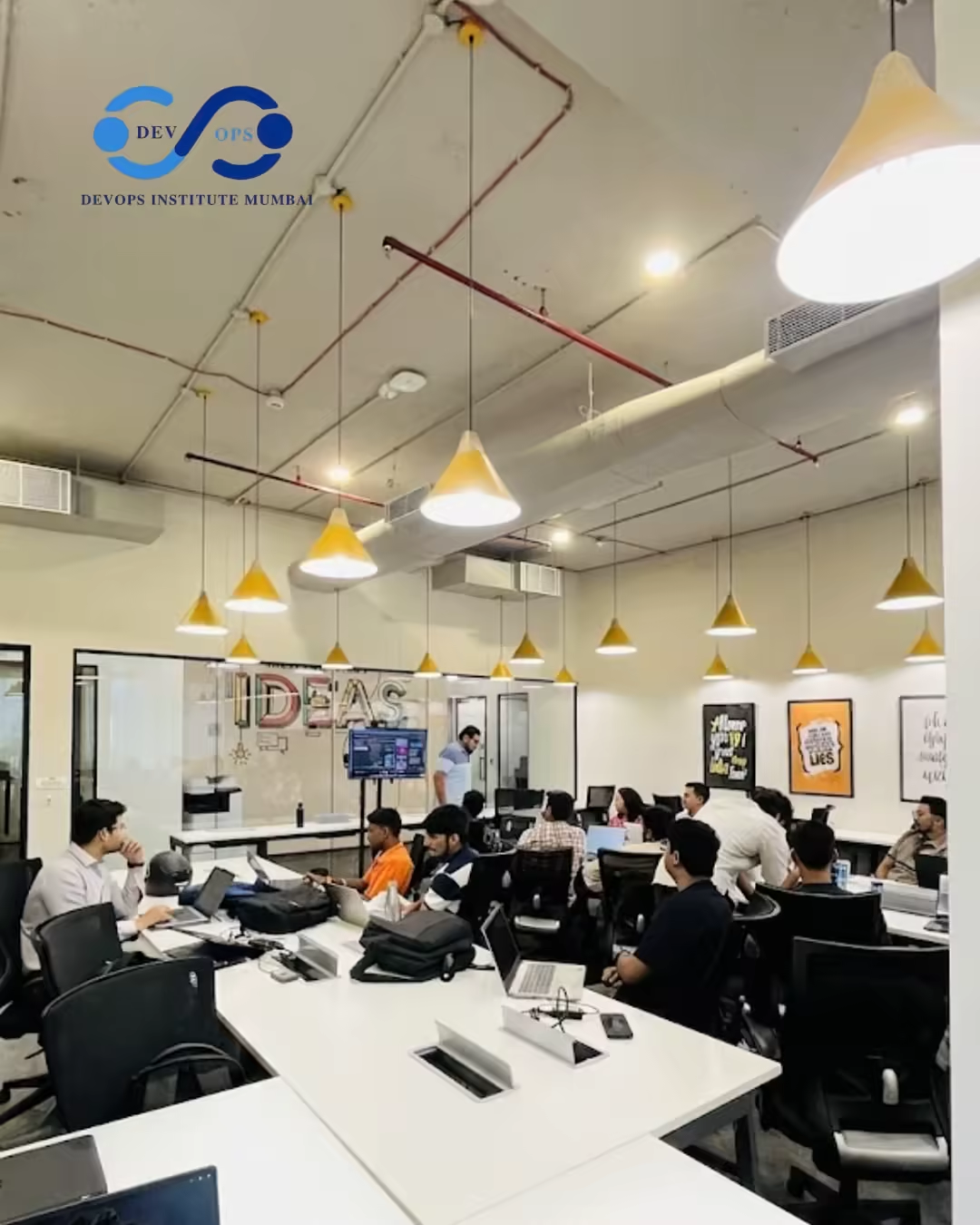
100%
Placement support after training
4.7 ★
Google Reviews (5+ Yrs)
4 Months
To become job-ready
100%
Classroom + placement support
Weekend
& weekday batches
Saki Naka is the Metro Line 1 station for the cloud computing course, and the classroom is still Lodha Supremus on Saki Vihar Road, not a lab inside the station. AWS, Azure and GCP are taught with placement support. 450+ placed and 100% Placement are the published outcomes. Call 083695 18569 about the open batch.
Last updated: October 2026
Who already works in the industrial and office belt
This page is for people whose desk is already in the Saki Naka industrial and office belt, not for readers collecting station names. Metro Line 1 puts the stop on the Andheri–Ghatkopar stretch, and Andheri-Kurla Road is the road those offices already use. Jari Mari sits nearby as a locality people say when giving directions. The cloud labs are not in the station concourse and not in a factory shed beside it. They are at Lodha Supremus, a last mile along Saki Vihar Road. If you can already reach your office on this stretch, you can reach the classroom without a new theory of Mumbai. The consoles waiting there are AWS, Azure and GCP. Bring the office problem, not a station list.
The working day in this belt is often a mix of support tickets, vendor consoles and a building that never quite matches the diagram. A cloud seat is useful when those tickets have started to mention accounts you do not yet control. You do not need to travel across the city to begin. You need a last mile you will actually repeat, and a lab that is hands-on enough to survive contact with a real workday. About 80% of a session is that kind of work. Call 083695 18569, say which building you already work in only as context, and ask which cloud seat is open. The belt is the audience. It is not the campus.
What the last mile along Saki Vihar Road actually is
The last mile is a walk or a rickshaw from the metro, or from an office already on the road, to Lodha Supremus. This page will not publish a minute count for either, because a minute count ages the moment traffic or a procession changes the road. What it will publish is the address you are aiming at: Lodha Supremus, B 1307, Saki Vihar Road, Tunga Village, Chandivali. Leave the station toward that road. If you are already in an office on the belt, you may not need the metro at all. The mistake to avoid is treating the station as the classroom because every other suburb page names it as the stop. Their map is not your room.
A rickshaw is the ordinary choice when you are carrying a laptop and do not want to guess the walk. A walk is ordinary when you already know the road from work. Neither choice creates a second lab in Jari Mari or inside an industrial estate gate. Amit Mishra is the mentor named for readers whose offices already touch more than one cloud. He is a delivery solution architect at Databricks, with 18+ years across AWS, Azure and GCP. The profile is multi-cloud architecture, not a DevOps job title. Databricks does not endorse this batch and does not reserve seats for one office tower on the road. Ask who is teaching before you assume the profile is the roster.
| How you leave work | What not to assume | What happens at the building |
|---|---|---|
| Walk from the metro with a laptop | That the station is the classroom | You still enter Lodha Supremus |
| Rickshaw along Saki Vihar Road | That a minute count exists here | You ask for B 1307 |
| Straight from an office on the belt | That the metro is compulsory | The same AWS, Azure and GCP labs |
| A driver who only knows Jari Mari | That Jari Mari is a campus | You name Tunga Village and the tower |
| A colleague who says 'the station' | That a concourse has the accounts | You correct them with the address |
Which AWS tasks suit a desk already on this road
AWS, for someone who already works nearby, should feel like a cleaner version of tickets you have seen, not like a sightseeing tour. IAM is users and groups before anyone launches a machine, because shared root keys are how small offices get stuck. EC2 is the instance. EBS is the disk you snapshot before a change you cannot undo at 7 p.m. A load balancer sits in front so the sample site is not one box with a hopeful public address. S3 is where files go, with versioning, so an overwritten object is a lesson rather than a crisis. You practise this after the last mile, in the room, not on the pavement outside the station.
Networking is the hour that separates a console tourist from someone who can draw. You build a VPC, split subnets, write route tables, and give a private subnet a NAT path so it can update without sitting open. Security groups are the doors. RDS holds the relational data for the sample application. DynamoDB is mentioned as the key-value option you should recognise in a design review at work the next day. CloudWatch alarms, CloudTrail's record of who changed a rule, and CloudFormation's template close the pass. The finish is a sample application deployed on AWS from end to end. If your office already has an AWS account, say so, and still do the lab on the teaching account rather than on production.
How Azure fits an office that already lives in Microsoft tools
Plenty of desks on this belt already sign into Microsoft tools. Azure is the pass that takes that familiarity into a network you can defend. Entra ID is users, groups and roles. Virtual machines and availability options are the compute, including a plain statement that one VM is not a resilient design. Virtual networks, subnets and network security groups are the filter. Storage accounts are how this console names disks and objects. A person who supports those tools from an office near Jari Mari and a person who only changes trains here do the same lab. Proximity does not create a private Azure syllabus for the belt. You still create the users and groups yourself.
App Service is the simpler host for an application. AKS is the cluster, worth doing even if your office has not said Kubernetes out loud yet. Azure DevOps pipelines are the release, the opposite of copying a build by hand between two servers in the same industrial lane. Azure Monitor is how you look afterwards. Leave able to provision, lock access, deploy, pipeline and watch. If your office is Azure-heavy and AWS was only comparison, say that when you call 083695 18569. The last mile does not get shorter because the vendor is familiar. The seat still has to be the open one, at Lodha Supremus, not a conference room in your own building. A familiar login is not a completed lab.
What GCP adds for a team that is multi-cloud curious
Multi-cloud curiosity on this road is common and often shallow: a logo in a proposal, a project nobody owns, a firewall nobody drew. GCP is where that shallowness gets corrected. The console and gcloud come first, then IAM, so the project is not a single owner's key on a laptop. Compute Engine is the virtual machine. VPC firewalls are the rules you should be able to contrast with security groups and NSGs from the earlier passes. Cloud Storage is the object shelf. You do this a rickshaw ride from the office, which is close enough that skipping the lab because 'work is already cloud' is a poor excuse. Work being nearby is the reason to attend, not the reason to skim.
GKE is the cluster. Cloud Build is the build you can repeat without a hero. Cloud Monitoring and Logging are how you see the result when you are back at your own desk the next morning and something looks quiet. Outcomes to demand of yourself are an instance, a firewall you can sketch, a deployment, a build and a chart. Amit Mishra's architecture background is a reason to ask for this comparison seriously. It is not a reason to skip the clicks. Ask whether the open seat includes the third console or whether you are looking at a 40-hour single-cloud schema. The flagship is the four-month, 160-hour room. Proximity does not pick the length for you.
Why the station is a stop and the building is the class
Every other cloud page on this domain tells its readers to alight at this metro stop. That advice is for them. It is not a description of a classroom inside the station. You, if you work here, already know the stop is a place people pour out toward offices, workshops and the road. The teaching room is further along Saki Vihar Road. Repeating a list of upstream stations would turn this page into a directory, which helps travellers from elsewhere and wastes the reader whose problem is the last mile. If you need the upstream pattern, read the suburb page for the place you live. If you work here, memorise the building. The upstream stops belong on other pages.
Tunga Village is the locality printed with the tower, useful when a rickshaw driver wants a neighbourhood rather than a brand. B 1307 is the unit. Chandivali is the suburb name on the address even though the metro stop everyone quotes is this one. Hold both facts without merging them. The existing page for pipeline and cluster work, rather than for the three consoles, is /devops-course-in-saki-naka. Open it if your office gap is delivery tooling and the consoles are already boring. Stay on this page if the consoles are the gap and the last mile is the only journey question left. The phone for the open batch is 083695 18569. Say the belt if that is where you already sit.
How hands-on time and course length get decided
Length is a seat choice, not a function of how close your office is. The individual cloud schema publishes 40 hours. The flagship publishes four months and 160 hours. A person who can walk to class might be tempted to pick the longer room because the journey is easy, or the shorter room because work is next door and evenings are thin. Either temptation can be right. Neither is automatic. About 80% of a session is hands-on, which is awkward to fake when the instructor can see your screen. Weekday batches can suit a belt office that ends near the lab. Weekend batches can suit a shift that does not. No clock grid is printed.
Eligibility is basic computer skills, fundamentals first. Freshers who have just joined an office on the road and administrators who have kept servers for years are both in the published audience. Vendor badges are booked with Amazon, Microsoft or Google. This classroom does not print them. A price is not listed. Because you are close, the useful discipline is to visit the room before you invent a picture of it. Use the map pin for Lodha Supremus, not a pin dropped on the metro. Call 083695 18569 and ask whether the seat you want still has a place, and whether it contains one console or three. Close offices do not get a private printed clock.
Which placement lines belong to the campus, not to one road
Working next to the campus does not create a private placement rate for the belt. There is no cloud-only total. The lines are 450+ placed, 100% Placement and 360° Placement Assurance, with 350+ hiring partners and the range 5–35 LPA. Resume support, mock interviews and career guidance are the activities. They are not a hiring arrangement with the industrial estate, and they are not stronger because your rickshaw ride is short. If a colleague turns 350+ into a list of towers on Andheri-Kurla Road, that list is fiction. The count is a count. The placement page is where the activities are described without new company names. Do not invent office towers to fill the count.
Reviews are a campus figure too. The published rating is 4.7 from 130 Google reviews. The profile to open is https://maps.app.goo.gl/5hUDHH1WjKevbkQz8. This page does not paste quotations, even for readers who walk past the building often enough to feel they already know it. Affiliations stay in plain text, once: NASSCOM, IBM, Govt. of India (MEITY), IIT Patna, and an IIT and Microsoft collaboration. They are not logos on a gate in Jari Mari. Call 083695 18569 when you want the cloud batch, and say you are coming from an office on the belt so the answer is about the seat, not about how to find the metro. Read the profile before you repeat the rating in the office.
What to settle when the office is already on the road
Settle the building before you settle the vendor. The building is Lodha Supremus on Saki Vihar Road, not the station and not your office conference room. The vendors are AWS, Azure and GCP, with a sample application on AWS as the finish you should be able to show. The length is 40 hours or 160 hours across four months. Amit Mishra's multi-cloud architecture background is a question for people whose proposals already name more than one platform. His Databricks role is not a DevOps title and not a placement channel for the belt. If you only needed the last-mile directions, you still need a seat. Directions are not enrolment. A short last mile still needs a seat you can attend.
Settle how you will cover the last mile on a day you are tired. Walk, rickshaw, or straight from the office, without a published minute attached to any of them. Jari Mari can be the phrase a driver knows. Tunga Village and B 1307 are the phrases that match the address. Weekday if the office already ends here, weekend if it does not. Phone 083695 18569 and name the length first. Mention the belt only so nobody sends you a cross-city plan you do not need. Bring one account problem from work, anonymised, so IAM on the first console is a real argument about users and groups rather than a diagram with no stakes. Leave the station name out of the syllabus.
Frequently asked questions
- Is the Saki Naka cloud classroom inside the metro station?
- No. The station is the Metro Line 1 stop on the Andheri–Ghatkopar stretch. The classroom is Lodha Supremus on Saki Vihar Road, a last mile by walk or rickshaw. Jari Mari is a nearby locality, not a campus. AWS, Azure and GCP are taught in the building. People who already work on the industrial and office belt may skip the metro. Call 083695 18569.
- Does a Saki Naka office worker still need a long commute?
- Often no. If your desk is already on this belt, the journey is the last mile along Saki Vihar Road to Lodha Supremus, not a cross-city plan. This page does not print minutes for the walk or the rickshaw. It also does not turn your office into the lab. You still attend Chandivali for the consoles. Say so when you call 083695 18569 about the open batch.
- What AWS labs does the Saki Naka cloud page describe?
- IAM before EC2, EBS snapshots, a load balancer and S3 with versioning. Then a VPC with subnets, route tables, NAT and security groups. RDS is relational. DynamoDB is named so you recognise it. CloudWatch, CloudTrail and CloudFormation close the pass. The finish is a sample application deployed on AWS from end to end. Do the work on the teaching account, not on your office production account.
- How is Azure taught for offices near Saki Naka?
- Entra ID users, groups and roles, virtual machines, virtual networks, subnets, network security groups and storage accounts. App Service, AKS, Azure DevOps pipelines and Azure Monitor follow. Familiar Microsoft tools at work do not replace the lab. The last mile does not shrink because the vendor is familiar. Confirm the open seat includes this pass. The number is 083695 18569. The room is Lodha Supremus.
- What does GCP add for a Saki Naka team?
- A real pass instead of a logo: console, gcloud, IAM, Compute Engine, VPC firewalls, Cloud Storage, GKE, Cloud Build and Cloud Monitoring. Compare firewalls with security groups and NSGs. Being close to the campus is a reason to attend, not to skim. Ask if your seat is the 40-hour schema or the four-month 160-hour flagship. About 80% of a session is hands-on.
- Who is the multi-cloud mentor named for Saki Naka callers?
- Amit Mishra, a delivery solution architect at Databricks, with 18+ years across AWS, Azure and GCP. That profile is architecture, not a DevOps job title. Databricks does not endorse the batch or hold seats for one tower on the road. Confirm who teaches the open seat. The classroom is still the last mile to Lodha Supremus. Call 083695 18569.
- What placement figures apply to Saki Naka cloud students?
- The campus lines, not a belt quota: 450+ placed, 100% Placement, 360° Placement Assurance, 350+ hiring partners and 5–35 LPA. There is no cloud-only total. Resume support, mock interviews and career guidance are the activities. A short rickshaw ride does not improve the numbers. Reviews are separate: 4.7 from 130 Google reviews. Quotations are not pasted here.
- Which profile should a Saki Naka reader check for reviews?
- https://maps.app.goo.gl/5hUDHH1WjKevbkQz8 carries 4.7 from 130 Google reviews. Read it there. Affiliations in plain text are NASSCOM, IBM, Govt. of India (MEITY), IIT Patna, and an IIT and Microsoft collaboration. They are not logos on a Jari Mari gate. Placement lines stay the institute lines. The lab is on Saki Vihar Road, not in the station.
- Should a Saki Naka learner choose cloud or the existing DevOps page?
- Choose this page if the gap is AWS, Azure and GCP. The DevOps URL already on the site is for pipeline and cluster intent, and it is named once in the article above. The building is the same. The first lab is not. A 40-hour cloud schema and the 160-hour flagship are different seats. Call 083695 18569 and say which gap you mean. No price is printed.
- What should a Saki Naka caller say about the open cloud batch?
- Say you already work on the belt or that you will use the metro, then the last mile. Say walk, rickshaw, or straight from the office, without asking for a minute count. Say 40 hours or the 160-hour flagship, and whether you need all three clouds. The number is 083695 18569. You are booking Lodha Supremus, B 1307, not a room inside the station.
Ask about the next batch
Lodha Supremus, B 1307, Saki Vihar Rd, Tunga Village, Chandivali, Powai, Mumbai, Maharashtra 400072. Phone 083695 18569. WhatsApp the campus.