Cloud Computing Course: Syllabus, Duration and Career
100% practical classroom DevOps training in Chandivali, Powai — with hands-on AWS, Azure & GCP labs, weekend & weekday batches, and dedicated placement support.
- 100% Classroom Training
- AWS, Azure & GCP Hands-on Labs
- Weekend & Weekday Batches
- Dedicated Placement Support
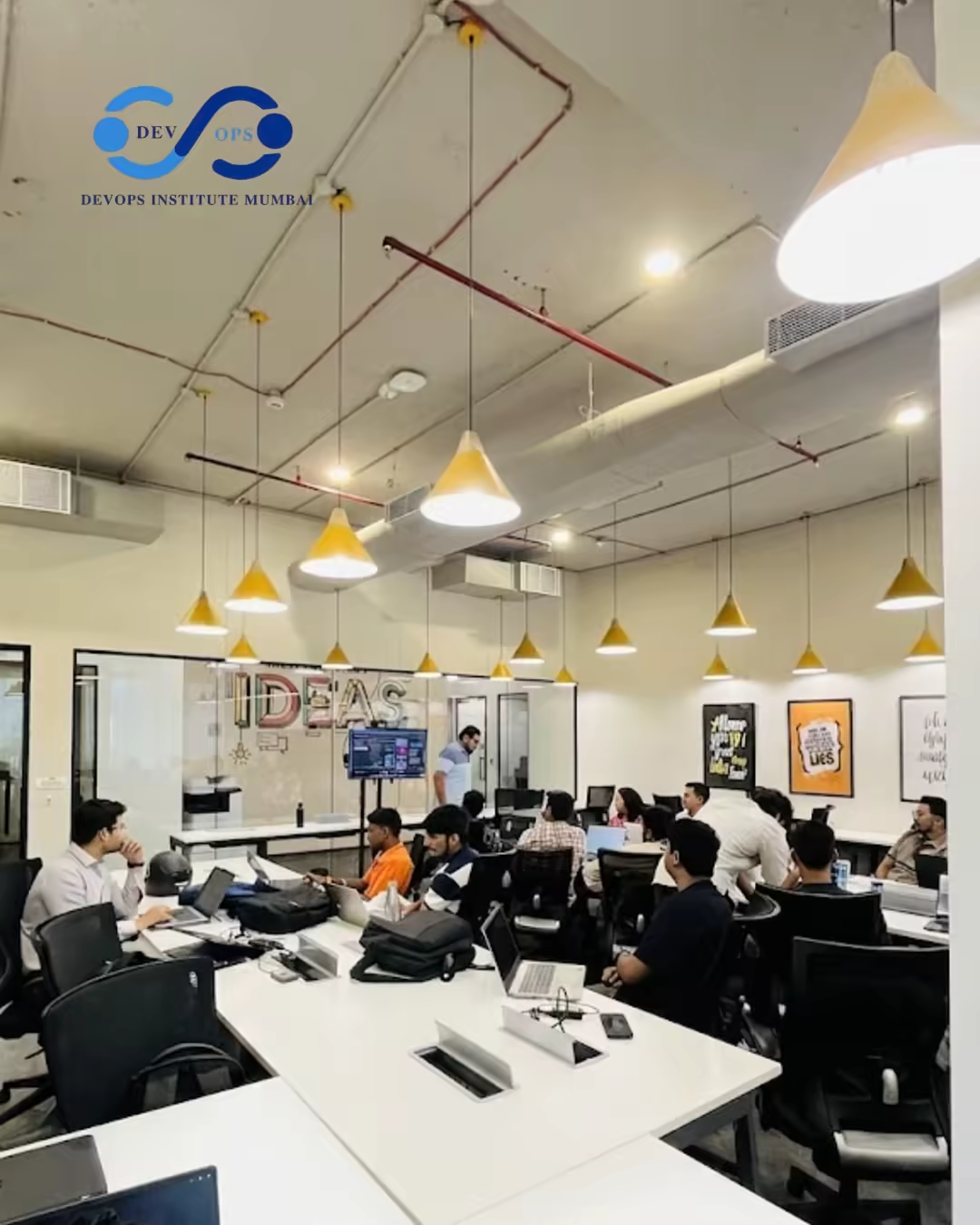
100%
Placement support after training
4.7 ★
Google Reviews (5+ Yrs)
4 Months
To become job-ready
100%
Classroom + placement support
Weekend
& weekday batches
DevOps Institute in Chandivali, Powai offers a classroom cloud computing course covering AWS, Azure and GCP, with weekday and weekend batches and 100% Placement support. Labs run at Lodha Supremus. The published placement figures are the institute's, including 450+ placed. Call 083695 18569.
Last updated: October 2026
What is a cloud computing course, as this campus teaches it?
A cloud computing course here means you operate real accounts on Amazon Web Services, Microsoft Azure and Google Cloud. You are not collecting logos. On AWS you design a network, launch compute, store objects and watch the result. On Azure you do the equivalent with virtual machines, Entra ID and, later, AKS. On GCP you do it with Compute Engine, VPC firewalls and GKE. The three course pages are the source of those verbs. This pillar puts them in one place and points to the Mumbai classroom where they are practised.
Cloud is not a rival product to the DevOps course. The flagship description joins AWS, Azure, GCP, Docker, Kubernetes, Terraform and CI/CD in the four-month room. You can still start with one cloud if that is the gap. The comparison page is the decision note. This page is the syllabus note.
What does the AWS portion cover?
The AWS course starts with cloud fundamentals and the AWS global infrastructure, then Identity and Access Management. Compute is EC2, EBS and load balancing. Storage is S3, including versioning and static website hosting. Networking is a VPC: subnets, route tables, NAT and security groups. Data is RDS and a first look at DynamoDB. Operations are CloudWatch, CloudTrail and basic cost controls. The published finish line is a sample application deployed on AWS from end to end. Tools include the console, the CLI, EC2, S3, VPC, IAM, RDS, CloudWatch and CloudFormation.
People join while preparing for AWS certification exams. That sentence is on the course page. It means the labs overlap the exams. It does not mean DevOps Institute prints the AWS certificate. You book the exam with Amazon if you want the badge.
What does the Azure portion cover?
Azure starts at the portal and the CLI, then Microsoft Entra ID: users, groups and roles. Compute is virtual machines and availability options. Networking is virtual networks, subnets and network security groups. Storage accounts and data services follow. App Service is the simpler deploy. Azure Kubernetes Service is the cluster step. Azure DevOps pipelines are the release step, with Azure Monitor and Log Analytics beside them. The outcomes on the course page are: provision machines and networks, control access, deploy to App Service and AKS, build a pipeline, and monitor it.
The audience named on the page includes people who already live in Microsoft estates, administrators moving to Azure, freshers, and engineers preparing for administrator or DevOps certifications. Same rule as AWS: preparation is not the badge.
What does the GCP portion cover?
GCP starts with the console and gcloud, then IAM. Compute Engine is the virtual machine. VPC networks, subnets and firewall rules are the network. Cloud Storage is the object store. Google Kubernetes Engine is the cluster. Cloud Build is the CI/CD step. Cloud Monitoring and Logging are the operations step. Outcomes: launch Compute Engine, design a VPC, deploy to GKE, automate a build, and observe a workload.
The course page says you can combine GCP with Kubernetes and DevOps modules. That is the multi-cloud claim in one sentence. It is not a statement that every batch automatically includes every module. Ask 083695 18569 what the current batch contains.
How long is the cloud course, and who can join?
The flagship classroom is published as four months and 160 hours. Individual cloud course schemas publish a 40-hour workload. Do not assume every AWS batch is the 160-hour program. Ask which one you are buying. Weekday and weekend batches exist. About 80% of a session is hands-on. Eligibility is the same published line as DevOps: basic computer skills, with fundamentals taught first. Freshers and working professionals are both named on the cloud course pages.
A working professional should read the weekend-batch page before choosing a suburb. A fresher should read the freshers page. The salary page will not give you a cloud-specific package. The only figures on the site are 5–35 LPA and one fresher story at 6.5 LPA.
How does placement work for the cloud course?
There is no second placement statistic for cloud. The institute figures are 450+ placed, 100% Placement and 360° Placement Assurance, with 350+ hiring partners. Resume support, mock interviews and career guidance are the activities named. Sneha P.'s story is the closest cloud-shaped quote: a weekend batch, AWS, Docker and Kubernetes, and the role label Cloud Support Engineer. Her employer is not named. Use the cloud placement page for that limit, and do not stretch one quote into a hiring list.
Where do you take the cloud course in Mumbai?
At Lodha Supremus, B 1307, Saki Vihar Road, Tunga Village, Chandivali, Powai, Mumbai 400072. Phone 083695 18569. Metro Line 1 to Saki Naka is the rail landmark. Area pages for Powai and Andheri exist for the cloud course, and the Mumbai cloud page is the hub. Thane, Vashi and Ghatkopar stay on https://devopsinstitutemumbai.co.in/. DevOps Institute is affiliated with NASSCOM, IBM, Govt. of India (MEITY) and IIT Patna, and works in collaboration with IIT and Microsoft. The names are written out in words. This page does not show affiliation logos.
How do the three cloud courses fit in one classroom?
DevOps Institute publishes three cloud courses and one flagship sentence that puts AWS, Azure, GCP, Docker, Kubernetes, Terraform and CI/CD in the same four-month room. That is the source of the cloud computing course on this site. It is not a fourth product with a separate campus, a separate placement total, or a separate phone number. You still call 083695 18569 at Lodha Supremus, Chandivali, Powai.
Read the courses as layers. AWS is the first long console many Mumbai learners meet: identity, compute, object storage, a private network, a database, and the logs that show what the account did. Azure repeats the same kind of work with Microsoft's names: virtual machines, virtual networks, Entra ID, storage, App Service, AKS and Azure DevOps pipelines. GCP repeats it again with Compute Engine, VPC firewalls, Cloud Storage, GKE, Cloud Build and Cloud Monitoring. The repetition is the point. A person who can only click one vendor's wizard will stall on the next account.
Kubernetes sits in more than one place on purpose. The Kubernetes course starts from Docker and goes to pods, deployments, services, ingress, Helm and RBAC. The GCP course names GKE. The Azure course names AKS. The DevOps course names Kubernetes as the scheduler after Jenkins and Docker. If you are choosing a first page, use the comparison guide. If you already know you want the consoles, stay on this pillar and then open the course page for the vendor you will touch first.
What will you actually do on AWS?
The AWS course page is the checklist. It starts with cloud fundamentals and the AWS global infrastructure, then Identity and Access Management. Compute is EC2, EBS and load balancing. Storage is S3, including versioning and static website hosting. Networking is a VPC with subnets, route tables, NAT and security groups. Data is RDS and a first look at DynamoDB. Operations are CloudWatch, CloudTrail and basic cost controls. The published finish line is a sample application deployed on AWS from end to end. Tools named on the page include the console, the CLI, EC2, S3, VPC, IAM, RDS, CloudWatch and CloudFormation.
Certification is named as preparation, not as an award. The course says people join while preparing for AWS certification exams, which means the labs overlap the exam topics. DevOps Institute does not print the AWS certificate. You book that exam with Amazon if you want the badge. The site does not name which AWS exam code the current batch sits beside. Ask the campus before you pay an exam fee to a vendor.
Nothing on the AWS page is a fee, a batch clock, or a hiring-company list. Those stay off this pillar as well. The placement lines that do exist are the institute lines: 450+ placed, 100% Placement and 360° Placement Assurance, with resume support, mock interviews and career guidance. They are not an AWS-only statistic.
What will you actually do on Azure?
The Azure course uses the same shape with Microsoft's vocabulary. Virtual machines and virtual networks are the compute and network pair. Entra ID is the identity service the page names, including the older Azure AD wording so learners recognise both. Storage, App Service, AKS and Azure DevOps pipelines are the rest of the published list. You are learning to build a resource group you can explain, not to collect portal screenshots.
AKS is the point where Azure and the Kubernetes course touch. If your goal is a cluster, you can start on the Kubernetes page and use Azure as the place the cluster runs, or start on Azure and meet AKS after the network and identity labs. The site does not publish a required sequence beyond the order inside each course. The flagship description is the closest thing to a combined path, and it still lives in the Powai classroom.
Azure certification prep is the same kind of sentence as the AWS one: labs can support a vendor exam, and the institute is not the exam board. An exam name is not published. Until then this page will not invent an AZ code.
What will you actually do on Google Cloud?
The GCP course covers Compute Engine, Cloud Storage, VPC networks, IAM, a look at BigQuery, Google Kubernetes Engine and Cloud Build, plus Cloud Monitoring on the operations side. The page's outcome is a workload running on Google Cloud with a build path, not a tour of every product in the catalogue. BigQuery is described as fundamentals. Do not read this pillar as a data-engineering course. The sister brand for that work is Data Engineering Institute at https://datainstitute.in/, and it is a different site.
GKE is the third place Kubernetes appears. A learner who only memorises kubectl without a cloud network will still get stuck when the cluster needs a subnet, a firewall or a registry. That is why the cloud pillar and the DevOps pillar link to each other instead of pretending one replaces the other.
The same placement paragraph applies. There is no GCP-only placement count on this site. Sneha P.'s published story mentions AWS, Docker and Kubernetes and the role label Cloud Support Engineer. Her employer is not named. One story is not a salary survey.
Who is the cloud course for, and how long is it?
Each cloud course says it starts from fundamentals, so a fresher with basic computer skills is inside the published eligibility. Working professionals are inside it too: weekend batches exist, and Umesh Sonawane's published note is about flexible batches and weekend support during a career shift. The site does not publish an entrance test, a degree requirement, or a maximum age.
Duration has two published numbers and you should keep both. The flagship line is four months to become job-ready, with a schema workload of 160 hours and a schedule duration of P4M. The individual cloud course schemas use a shorter 40-hour workload. This page will not collapse those into a single invented timetable. Call the campus, name the course, and ask which number applies to the batch you would join. Weekday and weekend are both published. Blended means classroom labs plus online contact, not a second address in your suburb.
Module hours inside a cloud course are not printed. A clock-time breakdown is not published. Until then the syllabus-style claim stops at the tool list above.
How does placement support show up for cloud roles?
The activities the site actually names are resume reviews, mock interviews, a project portfolio and career guidance. 350+ hiring partners is the published partner count. Company names are not listed. A hiring-company list is not published. 5–35 LPA is the published range. Rajeswari Singh's card is the one package with a number, 6.5 LPA, for a 2025 Vasai college graduate, and it still does not name the employer.
360° Placement Assurance is a published phrase. The institute has not published its own definition of what the phrase includes. This page repeats the phrase because removing it would delete an approved claim. It does not add a stronger promise than the one already published.
If you want the longer placement note, use the cloud computing course with placement page and the DevOps placement page. They separate the process from this syllabus. If you want local commute notes, use the Mumbai, Powai or Andheri cloud pages. Thane, Vashi and Ghatkopar stay on https://devopsinstitutemumbai.co.in/.
Which certifications, affiliations and gaps should you treat carefully?
DevOps Institute is affiliated with NASSCOM, IBM, Govt. of India (MEITY) and IIT Patna, and works in collaboration with IIT and Microsoft. The names are written out in words. This page does not show affiliation logos.
Safe certification line: AWS, Azure and Kubernetes labs overlap vendor exam topics, including CKA or CKAD-style work on the Kubernetes course. The institute does not say it awards those certificates. Current exam codes and a completion letter are not named, so the site does not list an awarded credential.
Mentor line: named mentors, their current employers and LinkedIn profiles are on the trainers page, with Person schema for each profile. This pillar's byline stays the organisation, because a single author is not assigned to the essay.
What should you open next?
Open the AWS, Azure or GCP course page for the tool list in the catalogue's own words. Open the DevOps course pillar if the pipeline, Docker, Terraform and monitoring are the gap rather than the console. Open the Mumbai hub if the remaining question is the commute to Saki Naka and Lodha Supremus. Open the fees page if the remaining question is money: it explains what can change a fee and then tells you to call, because no number is printed.
Open the buyer's guide if you are still deciding whether a classroom is the right shape. It scores this campus only. It does not name another training company. Open the reviews page for the four stories and the 4.7 rating from 130 Google reviews already shown on the site and in llms.txt.
The address, repeated so a citation has it in one place, is Lodha Supremus, B 1307, Saki Vihar Road, Tunga Village, Chandivali, Powai, Mumbai, Maharashtra 400072. Phone 083695 18569. Metro Line 1, Saki Naka station, is the rail landmark used across the local pages. Last updated October 2026.
Frequently asked questions
- What is included in the cloud computing course?
- AWS, Microsoft Azure and Google Cloud labs, as detailed on each course page, taught at the Powai campus.
- Is Kubernetes part of cloud or DevOps?
- Both. GKE and AKS appear on the cloud courses. Docker and Kubernetes also have their own course and sit inside the DevOps toolchain.
- How long is it?
- The flagship figure is four months and 160 hours. Individual cloud schemas list 40 hours. Confirm your batch.
- Can a beginner join?
- Yes. Each cloud course says it starts from fundamentals.
- Does placement support apply?
- Yes, using the institute lines: 450+ placed, 100% Placement and 360° Placement Assurance.
- Are fees listed?
- No. Call 083695 18569.
- Which page is the local campus?
- The Powai cloud page and the Mumbai cloud hub. The classroom is Chandivali.
Ask about the next batch
Lodha Supremus, B 1307, Saki Vihar Rd, Tunga Village, Chandivali, Powai, Mumbai, Maharashtra 400072. Phone 083695 18569. WhatsApp the campus.
Visit Our Campus in Chandivali, Powai
Visit DevOps Institute - AWS, Azure & GCP Course at:
Lodha Supremus, B 1307, Saki Vihar Rd, Tunga Village, Chandivali, Powai, Mumbai, Maharashtra 400072Call us: 083695 18569
Our campus at Lodha Supremus on Saki Vihar Road is easy to reach from Chandivali, Powai, Saki Vihar Road, Tunga Village, Andheri East, Hiranandani, Saki Naka and across Mumbai. If you are looking for an IT training institute near Powai or cloud and DevOps classes in Mumbai, drop in for a campus visit and a free counselling session.